
OxyContin vs Oxycodone: Extended-Release vs Immediate-Release and Why It Changes Overdose Risk
TL;DR
OxyContin is a brand name. Oxycodone is the drug inside it. The OxyContin vs oxycodone question is really about how the pill releases the drug.
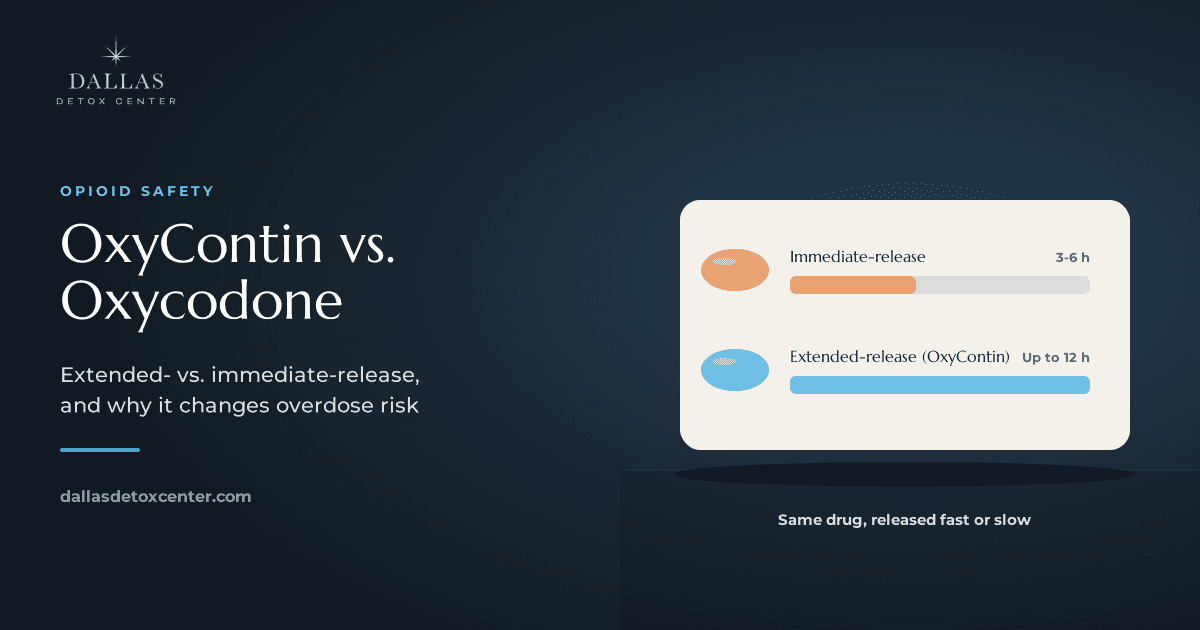
Immediate-release oxycodone works for 3 to 6 hours. OxyContin is extended-release and works for up to 12 hours.[1]
An OxyContin tablet holds 10 to 80 mg of oxycodone, so crushing, chewing, or snorting it can release a large dose at once.[1]
Both forms can cause physical dependence, addiction, and fatal respiratory depression.
If you think someone is overdosing, call 911 right away. Withdrawal and dependence are treatable with medical support.
Table of Contents
How extended-release and immediate-release formulations work
Dangerous misuse: crushing, chewing, and mixing with other substances
Introduction
You found a bottle in a parent's cabinet, or your own prescription changed, and now you are trying to work out whether OxyContin and oxycodone are the same thing. The OxyContin vs oxycodone question comes up a lot, and the honest answer is "yes and no."
The difference matters because it changes how a pill behaves in the body, and that changes the risk of overdose. This article explains the two in plain terms, shows what makes each one dangerous, and tells you when to call for help. If you are in the Dallas area and worried about yourself or someone you love, you will also learn what treatment looks like at Dallas Detox Center.
OxyContin vs oxycodone: what's the difference?
Oxycodone is the medication. It is a semi-synthetic opioid made from thebaine, a compound found in the opium poppy, and it is a Schedule II controlled substance.[1] OxyContin is one brand of it, introduced in 1996 as an extended-release tablet.[1]
Other oxycodone products include Roxicodone and RoxyBond (immediate-release), and Percocet and Percodan, which combine oxycodone with acetaminophen or aspirin.[1] NIDA lists oxycodone as one of the most common prescription opioids, and it names OxyContin and Percocet as examples.[2]
Feature | OxyContin | Immediate-release oxycodone |
|---|---|---|
Active drug | Oxycodone | Oxycodone |
Release | Extended, over hours | Fast, all at once |
Effects last | Up to 12 hours | 3 to 6 hours |
Drug per tablet | 10 to 80 mg | Often lower per tablet |
Schedule | II | II |
The duration figures come from the DEA's oxycodone profile.[1] The DEA does not give a per-tablet range for immediate-release products in the material above, so ask a pharmacist about any specific bottle.

How extended-release and immediate-release formulations work
An immediate-release tablet dissolves and delivers its oxycodone soon after you swallow it. Pain relief comes fairly quickly, then fades within 3 to 6 hours.[1] It is often used for short-term pain, such as after surgery.
An extended-release tablet is built to let the drug out slowly, so one dose can last up to 12 hours.[1] It is meant for people who need round-the-clock pain control and have already been taking opioids.

Why formulation changes overdose risk
Both products carry the same basic danger. Acute oxycodone overdose can cause severe respiratory depression (dangerously slow or stopped breathing), cold and clammy skin, falling blood pressure and heart rate, coma, and death.[1] The OxyContin vs oxycodone difference is about how fast and how much drug reaches the body.
Extended-release tablets are the bigger worry because of the dose. The large amount of oxycodone in controlled-release tablets, 10 to 80 mg, is what makes them attractive to people who misuse opioids.[1] Take that tablet as designed and the drug trickles out. Break the design and a day's worth may arrive in minutes.
Immediate-release pills are not safe by comparison. They hit fast and wear off sooner, so a person may take another dose sooner too. Repeated doses, or a dose taken with alcohol, can add up. The DEA also notes that oxycodone is one of the most common drugs in prescription opioid overdose deaths.[1]
One more risk applies to every pill not from a pharmacy. NIDA reports that most recent overdose deaths involved illicitly manufactured fentanyl, which may be added to other drugs without the buyer knowing.[3] A counterfeit "oxy" tablet is not a safe guess.

Dangerous misuse: crushing, chewing, and mixing with other substances
NIDA describes how people misuse prescription opioids: taking more than prescribed, taking someone else's medicine, or taking it to get high.[2] Some people crush pills or open capsules, then snort the powder or dissolve it in water and inject it.[2]
With OxyContin, crushing or chewing defeats the slow-release design. The full dose can land at once, and that is how a pill meant to last 12 hours becomes an overdose.
Mixing is the other common path to harm. Opioids used alone or with other drugs are a major driver of the U.S. overdose crisis.[3] Alcohol and sedatives such as benzodiazepines also slow breathing, so combining them with oxycodone raises the danger. If you are using more than one, our benzo detox program and alcohol detox program exist for that reason.
Never crush, chew, break, or dissolve an extended-release tablet.
Never take someone else's prescription.
Do not combine oxycodone with alcohol or sedatives unless a prescriber has said it is safe.

Signs of opioid dependence and overdose warning signs
Oxycodone use can lead to physical dependence, tolerance, and addiction.[1] Dependence means your body has adapted and you feel sick without the drug. Addiction means you keep using despite harm. Either can happen to a person who started with a legitimate prescription.
Signs of dependence to watch for:
Needing higher doses for the same relief
Running out early or asking for early refills
Taking pills in a different way than prescribed
Feeling withdrawal when a dose is late
Pulling away from work, family, or things you used to enjoy
Signs of overdose are an emergency. They include slow or stopped breathing, cold and clammy skin, pinpoint pupils, extreme sleepiness, and being unable to wake the person.[1] Call 911 first. Our guide to Narcan myths and facts explains how the reversal medicine works. For a broader check on your own situation, see 7 signs it's time to seek drug rehab in Dallas.

Withdrawal and medical detox for oxycodone and OxyContin
Stopping suddenly after regular use can bring withdrawal. Oxycodone is also sometimes used to relieve or prevent withdrawal in people who are dependent on opioids, which is one reason the cycle is hard to break alone.[1] The extended-release form tends to produce a slower start, since it clears more gradually, while immediate-release withdrawal can begin sooner. Exact timelines vary by person, dose, and how long you have used.
Medical detox gives you monitoring and comfort while your body adjusts. The ASAM National Practice Guideline supports evidence-based treatment of opioid use disorder, and its 2020 update added 13 new recommendations and revised 35 existing ones.[4] Our prescription drug detox program follows that kind of evidence-based approach. For what the first days look like, read what to expect in your first 72 hours.
Getting help at Dallas Detox Center
Detox is the start, not the whole plan. Dallas Detox Center offers medical detox, residential inpatient care, dual diagnosis treatment for people who also have anxiety, depression, or trauma, and aftercare planning. You can see the full list on our treatment services page.
Cost worries stop many families from calling. Our post on whether insurance covers rehab in Dallas explains how to check your benefits. If you are comparing programs, 10 questions to ask before choosing a Dallas drug rehab can help.
Frequently Asked Questions
Q: Is OxyContin the same thing as oxycodone?
A: Not exactly. Oxycodone is the drug. OxyContin is a brand-name extended-release tablet that contains it.[1] The OxyContin vs oxycodone difference is mostly how the drug is released.
Q: Which is more dangerous, extended-release OxyContin or immediate-release oxycodone?
A: Both can cause fatal overdose. OxyContin tablets hold 10 to 80 mg, so misusing them can deliver a very large dose at once.[1] Immediate-release pills act faster and can be taken more often. Neither is safe outside a prescriber's directions.
Q: Why is it dangerous to crush or chew OxyContin tablets?
A: The tablet is built to release oxycodone slowly over up to 12 hours.[1] Crushing or chewing can let the whole dose in at once, which can slow or stop breathing. NIDA notes that people also snort or inject crushed pills, which adds more risk.[2]
Q: How long does withdrawal from OxyContin or oxycodone last, and does the formulation matter?
A: The sources above do not give a set timeline, and it varies by dose and length of use. Extended-release products wear off more slowly, so withdrawal may start later than with immediate-release pills. A medical team can give you a realistic estimate after an assessment.
Q: What should I do if I think someone is overdosing on an oxycodone product?
A: Call 911 immediately. Signs include slow or stopped breathing, cold and clammy skin, and being unable to wake up.[1] If you have naloxone (Narcan), give it, and stay with the person until help arrives.
Conclusion
The OxyContin vs oxycodone question comes down to one fact: they are the same drug in different delivery systems. Extended-release tablets carry a large dose meant to last 12 hours, and immediate-release tablets act fast and fade in 3 to 6 hours. Either can lead to dependence and overdose, especially when crushed, chewed, or mixed with alcohol or sedatives.
If you or someone you love is struggling with either form, you do not have to sort it out alone. Contact Dallas Detox Center at dallasdetoxcenter.com to talk through detox and treatment options today.
References
U.S. Drug Enforcement Administration, Diversion Control Division. Oxycodone. - https://www.deadiversion.usdoj.gov/drug_chem_info/oxycodone.pdf
National Institute on Drug Abuse. Prescription Opioids DrugFacts. - https://nida.nih.gov/publications/drugfacts/prescription-opioids
National Institute on Drug Abuse. Opioids. - https://nida.nih.gov/research-topics/opioids
American Society of Addiction Medicine. The ASAM National Practice Guideline for the Treatment of Opioid Use Disorder (2020 Focused Update). - https://www.asam.org/quality-care/clinical-guidelines/national-practice-guideline